
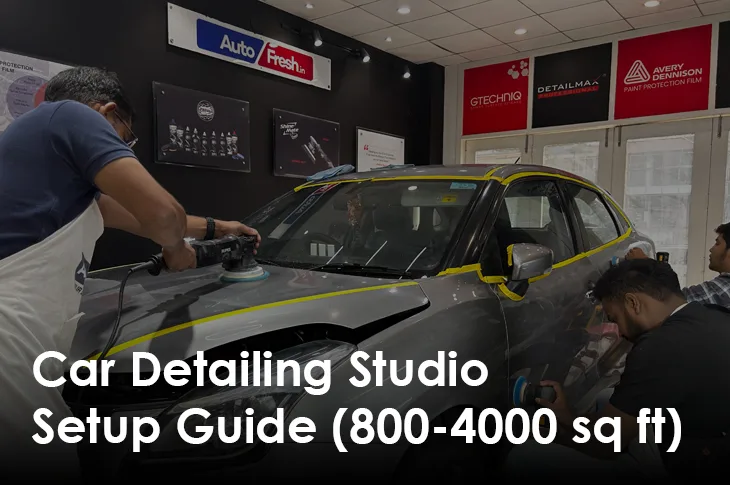
Starting a car detailing studio is becoming a popular business opportunity in India. The number of car owners is increasing every year, and many people want their vehicles to look clean, shiny, and well-maintained. Because of this demand, professional car detailing services are growing quickly in cities and even smaller towns.
However, opening a successful detailing studio requires proper planning. The size of your workspace, equipment, layout, and workflow all play an important role in daily operations. Many new detailers make the mistake of starting without a clear setup plan, which leads to wasted space, inefficient work, and lower profits.
This guide explains how to set up a professional car detailing studio between 800 sq ft and 4000 sq ft, which is the most common studio size range for detailing businesses in India.
Understanding the Space Requirement for a Car Detailing Studio
Before starting a detailing business, the first thing to decide is the studio size. The space required depends on how many cars you want to handle per day and what services you plan to offer.
A well-planned workspace helps technicians move around the vehicle easily, use machines safely, and complete jobs faster.
If the space is too small, technicians will struggle to open doors, use polishing machines, or move tools around the car. On the other hand, if the space is too large without proper planning, it may increase rent and operational costs without improving productivity.
That is why choosing the right car detailing studio size should always be based on daily car volume, service type, and future expansion plans.
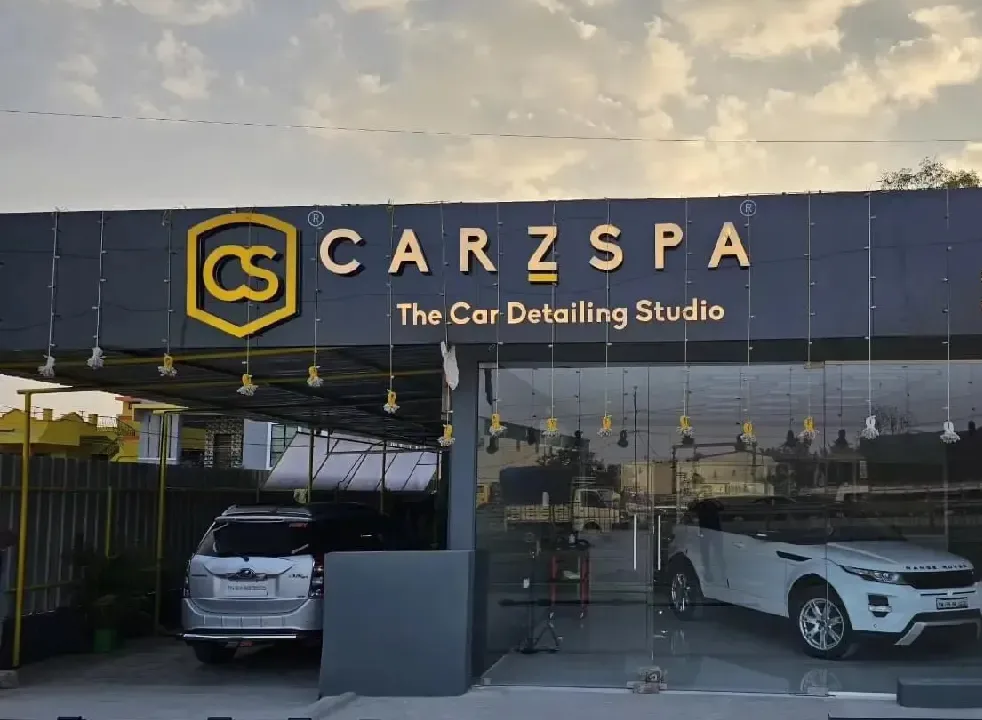
Small studio of 800–1000 sq ft:
A small studio of 800–1000 sq ft is usually suitable for basic services such as car wash, interior cleaning, polishing, and waxing. This type of studio can handle one car at a time comfortably.
This setup works well for entrepreneurs who are just entering the car detailing industry and want to start with a limited investment. In this type of studio, the space is generally designed to accommodate one car at a time, with enough area around the vehicle for technicians to work comfortably.
Even though the car detailing studio is small, it can still provide professional services such as exterior washing, foam wash, interior vacuum cleaning, dashboard detailing, polishing, and waxing. Many successful detailing businesses in India actually start from small studios like this and gradually expand as the customer base grows.
In a small setup, proper space planning becomes very important. Equipment like pressure washers, vacuum cleaners, and polishing machines should be placed in a way that they do not block movement. Wall-mounted storage racks can help keep chemicals and tools organised while saving floor space.
Lighting also needs to be planned carefully because a compact studio may not have natural sunlight from multiple sides.
Medium studio of 1500–2500 sq ft:
A medium studio of 1500–2500 sq ft allows you to manage two vehicles simultaneously and add services like paint polishing, ceramic coating, paint protection film preparation, and interior detailing.
This type of setup is ideal for detailers who want to handle two vehicles simultaneously and provide a wider range of services. With additional space, the studio can be divided into different working zones such as washing, polishing, coating preparation, and interior cleaning.
This layout improves efficiency because each stage of detailing can happen in a dedicated area. For example, one car can be washed while another vehicle is being polished. This reduces waiting time and increases the number of cars that can be serviced in a day.
A medium car detailing studio also allows the introduction of premium services such as paint correction, ceramic coating, and paint protection film preparation. These services require cleaner working conditions and better lighting, which becomes easier to manage when the studio has more space.
Another advantage of a medium-sized studio is the ability to store equipment properly. Air compressors, water tanks, and chemical storage cabinets can be placed in separate corners without disturbing the main work area. This improves safety and keeps the workspace organised.
Larger studio of 3000–4000 sq ft:
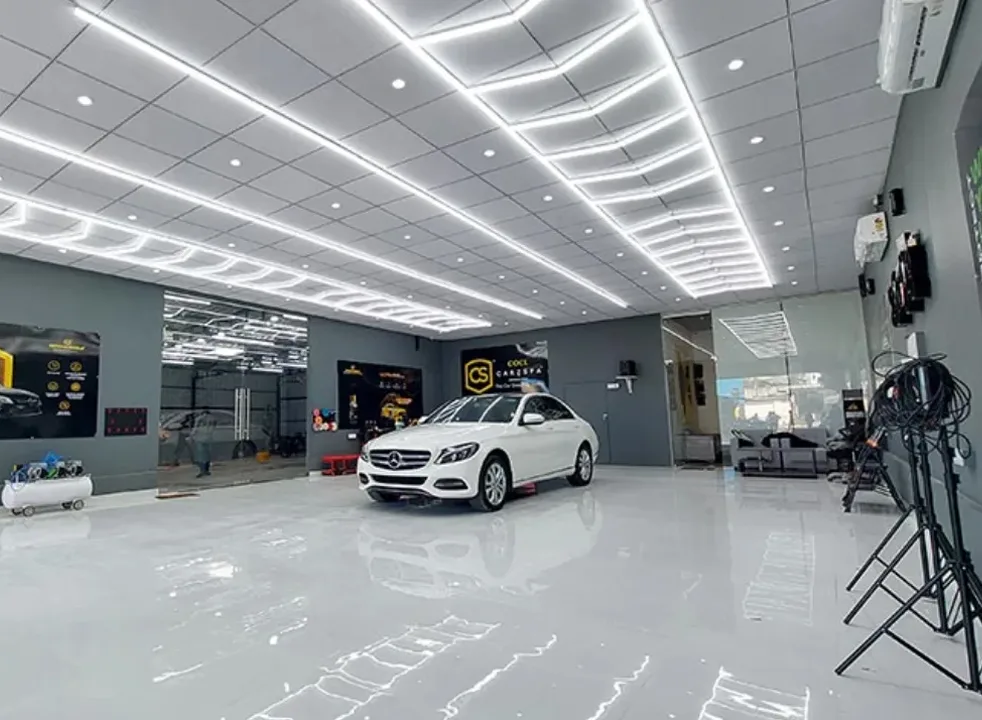
A larger studio of 3000–4000 sq ft is ideal for a full-service detailing centre. It can accommodate multiple cars, dedicated coating areas, washing zones, drying space, and customer waiting areas.
This size allows the studio to operate like a full-service detailing centre with multiple dedicated sections.
A large-sized car detailing studio can easily accommodate three to five vehicles at the same time, depending on the layout.
One area can be used for washing, another for paint correction, and a separate enclosed room can be created for ceramic coating application.
Keeping the coating area isolated from washing activity helps maintain a dust-free environment, which is important for coating durability and finish quality.
In bigger studios, owners also have the opportunity to create a customer-friendly environment. A waiting lounge, product display shelves, and a reception desk can be added near the entrance. This makes the studio look more professional and builds trust with customers who visit the facility.
Another benefit of a larger space is the ability to manage vehicle movement smoothly. Cars can enter from one side, move through different service stages, and exit from another side without blocking the workflow. This type of process flow improves productivity and reduces delays during busy days.
Safety is also an important factor when deciding studio size. Technicians need enough space to move around the vehicle while operating machines like polishers, compressors, and steam cleaners.
Adequate spacing prevents accidental contact with walls, tools, or other vehicles. It also reduces the risk of scratches and damage during detailing work.
Future expansion is another point that should be considered while selecting the studio size. Many detailing businesses start with basic services but later expand into advanced offerings such as ceramic coating, paint protection film, and specialised interior restoration.
Choosing a space that allows some level of expansion can help avoid relocation in the future.
In simple terms, the studio size should match the current business capacity while allowing room for growth. A well-planned workspace improves efficiency, increases service quality, and creates a professional environment for both technicians and customers.
When the right space is chosen and organised properly, even a small detailing studio can deliver excellent results and build a strong reputation in the local car care market.
Choosing the Right Location
Location plays a major role in the success of a car detailing studio. A good location improves visibility and attracts more customers.
Most detailing studios work well in areas such as:
- Automotive hubs
- Industrial zones
- Commercial areas with good road access
- Areas close to car dealerships or service centres
The location should allow easy vehicle entry and exit. There should be enough road space for customers to drive in and park comfortably.
Another important factor is water availability and drainage. Since detailing involves washing vehicles, the property should have proper water supply and drainage systems to manage wastewater.
Ideal Layout Planning for a Detailing Studio
A well-planned layout improves efficiency and prevents unnecessary movement inside the studio. Even if the studio is small, dividing the space into functional zones helps technicians work faster.
A typical detailing studio usually includes the following sections.
Vehicle Washing Area
The washing area is the starting point of every detailing process. Dirt, mud, and road contamination must be removed before any polishing or coating work begins.
This area should have:
- High-pressure washer
- Foam wash equipment
- Water drainage system
- Adequate lighting
For smaller studios around 800–1000 sq ft, the washing area and detailing area may be the same space. But in larger studios, it is better to keep washing and detailing separate to avoid water splashing on polished vehicles.
Drying and Inspection Area
After washing, the vehicle should move to a drying and inspection zone. Here, the technician removes remaining water using air blowers and microfiber towels.
This stage is important because proper inspection helps identify:
- Paint scratches
- Swirl marks
- Tar or iron contamination
- Paint oxidation
Good lighting is very important in this area because paint defects become visible only under proper light conditions.
Paint Correction and Polishing Zone
Paint correction is one of the most valuable services in a detailing studio. Many customers come for polishing to remove scratches and restore paint shine.
This area should have:
- Bright LED detailing lights
- Dual action polishers
- Rotary polishers
- Polishing compounds
- Microfiber cloths
The floor should be clean and dry because dust particles can damage freshly polished paint.
Ceramic Coating Application Area
If you plan to offer premium services like ceramic coating, you should dedicate a separate coating zone. Coating application requires a dust-free environment.
Important conditions for the coating area include:
- Closed room or partitioned space
- Controlled lighting
- Low dust environment
- Clean air circulation
Even a small 200–300 sq ft room can work well as a ceramic coating application area.
Interior Detailing Section
Interior cleaning is another important service offered by detailing studios. Seats, carpets, roof lining, and dashboard areas need special cleaning chemicals and equipment.
Interior detailing typically requires:
- Vacuum cleaner
- Steam cleaner machine
- Interior brushes
- All-purpose cleaners
- Fabric cleaners
This area should be dry and organised because interior components can get damaged if exposed to water.
Essential Equipment Required for a Detailing Studio
Professional equipment improves work quality and saves time. When starting a detailing studio, investing in reliable tools is important.
Some essential equipment includes:
High pressure washer is required for removing mud and dirt from the vehicle exterior. Foam wash equipment helps create thick foam that loosens dirt before washing.
An air compressor is commonly used in detailing studios to power tools and help remove dust from tight areas. It also assists in drying water from mirrors, grills, and emblems.
A dual-action polisher is one of the most important machines for paint correction and polishing. It helps remove swirl marks and enhances paint gloss safely.
Car vacuum cleaners and steam cleaners are widely used for interior detailing. These machines help remove dust, stains, and bacteria from seats and carpets.
Lighting is another critical part of detailing. Bright LED inspection lights help technicians see scratches and paint defects clearly.
Using professional-grade chemicals such as car wash shampoos, degreasers, polish compounds, and interior cleaners ensures better results and protects vehicle surfaces.
Water and Electricity Planning
Car detailing requires both water and electricity for daily operations. Many new detailing businesses focus on machines and chemicals but ignore basic infrastructure such as water supply, drainage, and electrical load.
Water is the most frequently used resource in a detailing studio. It is needed for exterior washing, foam wash, rinsing, cleaning wheels, and sometimes interior fabric cleaning.
The amount of water required depends on the washing method, equipment used, and the condition of the vehicle.
In traditional bucket washing methods, a single car may consume 120 to 150 litres of water.
However, when professional equipment such as a high pressure washer and foam wash system is used correctly, the water usage can be reduced significantly. A properly operated pressure washer usually consumes around 60 to 80 litres of water per car for a standard exterior wash.
If the vehicle is extremely dirty with mud or heavy contamination, the water usage may increase slightly. On average, most detailing studios use 70 to 120 litres of water to wash one car, depending on the process and technician habits.
For example, if a detailing studio washes 8 to 10 cars per day, the water consumption may reach around 700 to 1000 litres daily. Studios that only handle 4 to 5 vehicles per day may require around 300 to 500 litres of water.
Installing a water storage tank is highly recommended for every detailing studio. A storage tank helps maintain consistent operations even when the municipal water supply is interrupted. Many studios install storage tanks with a capacity between 1000 and 2000 litres so that there is enough water available throughout the day.
Water pressure is also important for efficient washing. Pressure washers perform better when there is a stable water flow. Some studios use booster pumps to maintain a steady water supply from the storage tank to washing equipment.
Another factor to consider is water drainage. Since multiple vehicles are washed daily, the washing area must have proper drainage channels so that water flows out easily.
Some professional detailing studios are also adopting water-saving practices to reduce consumption. Using foam pre-wash systems helps loosen dirt before rinsing, which reduces the amount of water needed.
Electricity planning is equally important for a detailing studio. Many professional detailing tools require a stable power supply to operate properly. Machines such as dual-action polishers, rotary polishers, vacuum cleaners, steam cleaners, air compressors, and pressure washers all depend on electricity.
To support all equipment safely, the studio should have proper electrical wiring and sufficient load capacity. Multiple power sockets should be installed around the workspace so that technicians do not rely on long extension cables.
It is also recommended to install separate power lines for heavy equipment such as air compressors and pressure washers. This prevents voltage fluctuations and protects machines from damage.
In larger studios, some owners also install backup power systems such as inverters or generators. This helps maintain operations during power cuts, especially when polishing or coating work is in progress.
Good water and electricity planning ensures that the detailing studio runs smoothly throughout the day. When technicians have an uninterrupted water supply and stable electricity, they can focus on delivering high-quality detailing results without delays or operational issues.
Proper infrastructure may not be visible to customers, but it plays a major role in running a successful and efficient car detailing business.
Flooring and Drainage Setup
Flooring in a detailing studio should be strong, non-slippery, and easy to clean. Many studios use epoxy-coated floors because they resist chemicals and water damage.
Proper drainage channels should be installed in the washing area to prevent water accumulation.
Good flooring improves safety for technicians and also creates a professional look for customers visiting the studio.
Customer Experience and Waiting Area
A professional detailing studio should also consider the customer experience. Even a small waiting area can create a positive impression.
If space allows, you can include:
- Comfortable seating
- Drinking water
- Display of detailing products
- Before and after photos of vehicles
Displaying car care products also creates an opportunity for retail product sales, which can become an additional income source for the detailing studio.
Staff Requirement for a Detailing Studio
The number of staff depends on the car detailing studio size and daily vehicle volume.
For a small 800–1000 sq ft studio, two technicians are usually enough to manage washing, polishing, and interior cleaning.
A medium studio 1500–2500 sq ft may require three to four technicians to handle multiple vehicles.
Large detailing centres with 3000–4000 sq ft space often have five to eight staff members including supervisors and customer handling executives.
Proper staff training is essential because detailing requires skill and careful handling of vehicles.
Estimated Car Detailing Studio Setup Cost
The cost of starting a car detailing studio varies depending on the location, equipment quality, and interior setup.
For a small studio, the initial setup investment may range between ₹3 lakh to ₹8 lakh.
A medium studio with better equipment and interior finishing may require ₹8 lakh to ₹15 lakh.
Large detailing centres with advanced services like ceramic coating, paint protection film preparation, and premium interiors may require ₹15 lakh to ₹30 lakh or more.
This investment usually covers equipment, studio setup, lighting, water system, and branding.
Marketing Your Car Detailing Studio
Opening a car detailing studio is only the first step. Consistent marketing is required to attract customers.
Digital marketing plays a major role in the detailing industry today. Platforms like Instagram, Google Maps listings, and local search visibility help customers discover nearby detailing studios.
Read now: Get your first 50 customers
Sharing before and after transformation photos, polishing videos, and coating results builds trust and attracts car enthusiasts.
Customer reviews and ratings also improve credibility and help your business grow through referrals.
Conclusion
Starting a car detailing studio between 800 sq ft and 4000 sq ft is a practical and scalable business model. With proper space planning, the right equipment, and trained staff, a detailing studio can handle multiple vehicles daily and generate steady income.
The key to success in this industry is quality work, consistency, and customer trust. Vehicle owners are very particular about their cars, so attention to detail and professional service make a big difference.
If the studio layout is well planned and the right detailing products and equipment are used, even a small setup can deliver professional results.
For new entrepreneurs and detailers planning to enter the car care industry, a properly designed studio is the foundation of a successful detailing business.