Buy the wrong rubbing compound, and you will not just waste money; you will spend an extra hour buffing out holograms you created yourself. Every detailer has a story like that, usually from early in their career, and it almost always comes down to grabbing a bottle off a shelf without checking a few basic things first.
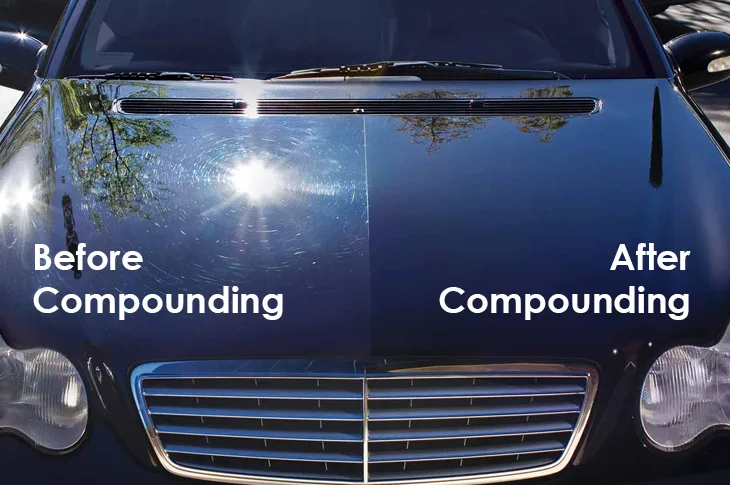
Cutting and rubbing compounds look deceptively similar from the outside. Thick, often white or beige, and packed in identical-looking jugs and bottles. But the differences between a compound that levels orange peel and swirl marks cleanly and one that leaves a haze of micro-marring can be huge. Since compounds are the most aggressive step in the paint correction process, a mistake here is expensive to fix. You are either living with the damage or moving to heavier cutting pads and starting over, which removes more clear coat than necessary.
This guide walks through the practical checks worth making before you commit to a compound, whether you are stocking a mobile detailing kit or setting up a full-time correction bay.
What Should You Actually Check Before Buying a Rubbing Compound?
Before buying, check the abrasive technology (diminishing versus fixed-abrasive), the cut level relative to your pad and machine setup, compatibility with clear coat type, working time before it dusts, dust/residue behaviour, safe use on dark colours, compatibility with your polisher’s speed range, and whether the compound is IPA-safe for wipe-down. Skipping any one of these tends to show up later as swirl marks, hazing, or wasted product.
1. Diminishing Abrasives vs. Fixed Abrasives: Know Which One You Are Buying
This is the single biggest technology shift in rubbing compounds over the last fifteen years, and it’s the first thing worth understanding. Older-style compounds use diminishing abrasives, meaning the abrasive particles break down as you work them, starting aggressive and finishing finer by the end of the pass. Newer compounds, popularised by brands like Menzerna with their Power Gloss lineup, use fixed-abrasive technology, where the particle size stays consistent throughout the working cycle, and the cutting power comes from the machine’s speed and pressure rather than the product breaking down.
Neither approach is objectively better, but they behave differently under the pad. Diminishing abrasive compounds tend to be more forgiving for someone still learning pad speed and pressure, since the product self-levels as it works. Fixed-abrasive compounds cut faster and more predictably in the hands of an experienced detailer, but they can leave marring if you don’t match them with the right pad or you run the polisher too fast for too long.
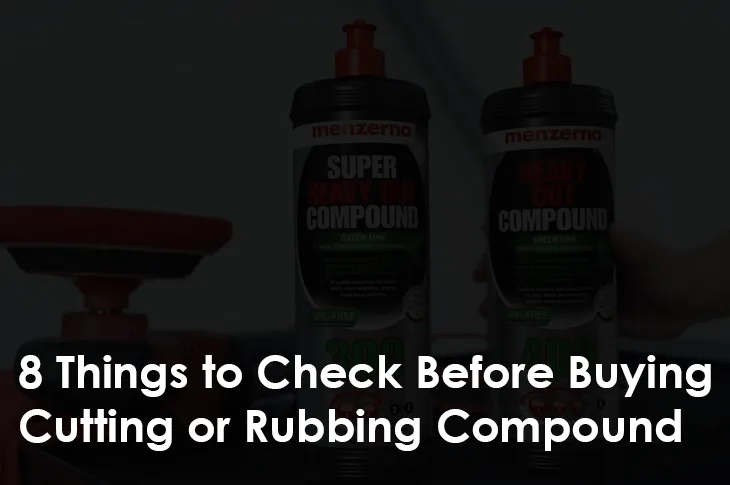
If you have ever wondered why two detailers using what looks like the same paint correction compound get different finishes, this is usually the reason: one of them understood which category they were working with and adjusted technique accordingly. A rubbing compound like Menzerna 400 Heavy Cut Compound falls into this fixed-abrasive, high-predictability category, which is why experienced correction detailers tend to reach for it on jobs where consistent, repeatable cutting matters more than a forgiving learning curve.
You can refer to Menzerna Technical Documentation
2. Match the Cut Level to Your Correction Goal, Not the Marketing Copy
Rubbing compounds are typically labelled heavy cut, medium cut, or light cut (sometimes called cutting compound, polish-compound hybrid, or finishing compound). The mistake many newer detailers make is buying the heaviest cut available on the assumption that more aggressive always means better results. In practice, a heavy-cut compound on a car with light swirl marks and clear coat that’s already thin from previous corrections is a good way to burn through paint faster than it needs to be removed.
A useful habit borrowed from paint thickness gauge readings: check the clear coat depth before deciding on cut level, especially on older vehicles or ones that have clearly been machine-polished before by a previous owner or shop. On a car with 90 to 100 microns of clear coat remaining, a heavy cut compound paired with a wool or heavy foam cutting pad is reasonable. On a car sitting at 60 microns or less, that same combination is risky, and a medium- or light-cut compound with a finishing pad is the safer call, even if it means an extra step to fully remove the defects.
For genuinely heavy correction work, think neglected fleet vehicles or cars with years of dealership-lot swirl marks; a car polishing compound such as Menzerna 1000 Heavy Cut Compound is built for that level of defect removal. For paint that only needs moderate correction rather than a full heavy cut, something like Scholl Concepts S40 Anti-Swirl Compound sits in the medium range and gives you room to correct without cutting more clear coat than the job actually calls for.
3. Compatibility With Single-Stage Paint and Older Clear Coats
Compounds formulated with today’s clear coat chemistry in mind don’t always perform the same way on single-stage paint, which is still common on classic cars, some commercial fleet vehicles, and older Japanese and European models from before the mid-1990s. Single-stage paint has colour pigment mixed directly into the top layer with no separate clear coat over it, so compounding it transfers colour onto your pad and towels, which is normal, but it also means the paint corrects and oxidises differently than modern OEM clear coat, which averages approximately 40–60 microns in thickness.
If a chunk of your customer base includes classic car owners, it’s worth keeping at least one compound on hand that’s specifically rated for single-stage paint, since some modern fixed-abrasive compounds are engineered around clear coat hardness levels and don’t cut single-stage finishes as predictably.
This is also where one-step rubbing compound-polish hybrids earn their place in a kit. A product like Menzerna 3 in 1 One Step Polish combines cutting and most paint correction removes approximately 1–5 microns depending on pad, compound, and passes, which is useful for daily maintenance details or lighter jobs where running a full multi-step correction isn’t practical or justified by the paint’s condition.
Does the compound’s working time matter as much as the cut level?
Yes, and it’s one of the more overlooked specs on a bottle. Working time (sometimes listed as “open time”) describes how long the product stays workable on the paint before it dries out and starts dusting excessively. A compound with a short working time forces you to work in smaller sections, which slows down large jobs and increases the risk of uneven correction between sections on bigger panels like hoods and doors.
Why This Trips Up Detailers Working in Hot Climates
Ambient temperature changes working time more than most people expect. A compound that behaves beautifully in a climate-controlled garage at 68°F can dry out within seconds outdoors in July heat, especially for mobile detailers working in direct sun. Detailers based in hot regions, and this is worth flagging for anyone operating in places like Gujarat or similar climates where garage temperatures can climb well past 35°C in summer, often find it worth testing a compound’s real-world working time on a test panel before committing to it for full jobs rather than trusting the number printed on the label, which is usually measured under controlled lab conditions.
4. Dust and Residue Behaviour
Some compounds are formulated as low-dust or dust-free, which matters less for the paint itself and more for your workflow and cleanup. Heavy-dusting compounds settle into trim, badges, and rubber seals, and on darker vehicles that dust becomes very visible against the paint, making the car look worse mid-process than it actually is. This isn’t purely cosmetic; dust that settles back onto the panel and gets reworked by the pad can contribute to fine marring, particularly with fixed-abrasive compounds where consistent particle size matters for a clean finish.
5. Behaviour on Dark Colours and Metallics
Black, dark grey, and dark blue vehicles show every flaw a compound leaves behind, which makes them the honest test of any product’s finishing quality. A compound that looks fine on a silver test panel can reveal micro-marring on black paint that wasn’t visible until you photograph the panel under direct sunlight or a swirl-finder light. If you detail a lot of dark vehicles, it’s worth specifically checking reviews, forum threads, or product descriptions for how a compound performs on dark colours before buying in bulk, since this is genuinely one area where anecdotal, experience-based feedback from other detailers tends to be more reliable than the manufacturer’s own marketing claims.
This is exactly the situation finishing-grade products are built for. Something like Menzerna 3000 Final Finish Compound is designed to remove the fine marring left behind by a cutting stage without introducing new haze, which is why it’s a common final step on black and dark metallic paint right before a wipe-down and sealant or coating application.
6. Machine and RPM Compatibility
Rotary polishers, dual-action polishers, and forced-rotation machines all interact with compounds differently, and not every compound is designed with all three in mind. Compounds intended for rotary use are often formulated to cut efficiently at higher heat and friction, while DA-specific compounds are tuned to cut effectively at the lower speeds and reduced heat generation typical of random orbital motion. Using a rotary-intended compound on a standard DA polisher can leave you working far longer than expected to achieve full correction, since the compound was never designed to break down properly at DA speeds and pad rotation patterns.
7. IPA and Panel Wipe Compatibility
After compounding, most workflows call for an isopropyl alcohol wipe-down or a dedicated panel wipe product to remove oily residues before moving to polish or sealant application. Some compounds, particularly those with heavier oil or filler content designed to temporarily mask fine scratches, need a stronger wipe-down to fully remove residue, or the fillers can hide the true state of correction and give a false sense of how clean the paint actually is underneath. Checking whether a compound is described as filler-free, or whether the manufacturer recommends a specific wipe-down process, tells you a lot about how honestly the “before and after” results will hold up once the car is out in sunlight for a few days.
8. Shelf Life and Storage Behaviour
This one rarely gets discussed but matters for anyone stocking inventory. Compounds can separate, thicken, or lose effectiveness over time, especially if stored in a hot vehicle or garage without climate control. A compound that’s been sitting unopened for eighteen months might need a thorough shake or even a slight reformulation in consistency before use, and in some cases a compound past its recommended shelf life simply won’t cut as effectively regardless of technique, pad choice, or machine speed.
| Compound Type | Best For | Cut Level | Finish |
|---|---|---|---|
| Heavy Cut | Deep Scratches | High | Low |
| Medium Cut | Swirls | Medium | Good |
| Fine Cut | Haze Removal | Low | Excellent |
Practical Takeaways From the Bay Floor
After using a range of rubbing compounds across different paint conditions, a few patterns hold up consistently.
Keeping two or three compounds on hand covers most situations without needing a shelf full of half-used bottles: a heavy cut for genuine defect removal, a medium cut for the in-between jobs that don’t need a full heavy cut, and a finishing compound for dialling in dark paint before it goes under lights.
Testing any new rubbing compound on a hidden panel, like inside a door jamb or under the fuel filler flap, before running it across a hood saves a lot of regret. And treating the working-time and dust-behaviour specs as seriously as the cut level itself tends to separate a smooth, efficient job from a frustrating one, especially in hotter working conditions where products behave differently than their labels suggest.
Final Thoughts
Choosing the right rubbing or rubbing compound isn’t about finding the single “best” product on the market; it’s about matching the compound’s abrasive technology, cut level, and working characteristics to the specific paint and conditions in front of you. Get that matching right, and the compounding stage becomes the fastest, most satisfying part of a correction job rather than the riskiest one.
If you’re building out or refining your detailing supply kit, it’s worth comparing rubbing compounds side by side rather than guessing from a product photo. Autofresh’s compound and polish range covers heavy, medium, and fine cut options from Menzerna and Scholl Concepts, along with one-step hybrids for faster jobs, so you can match the product to the paint in front of you rather than the other way around. Browse the range, and their team can help point you toward the right pairing for your specific workflow and climate.