
In the modern automotive detailing industry, car window film has become one of the most in-demand services offered by professional car detailers.
Customers today want more than just a shiny car – they expect comfort, privacy, protection, and style. That is where high-quality window tint comes into play.
For car detailers in India, offering professional car window film installation can significantly increase revenue while providing customers with valuable protection against heat, UV rays, and glare. With India’s hot climate, demand for high-quality window tinting is consistently growing.
Automotive window tint not only improves a vehicle’s appearance but also enhances interior protection, driving comfort, and energy efficiency. When properly installed, a premium film can reduce cabin heat, prevent interior fading, and even add a layer of security to the glass.
In Indian summer temperatures exceeding 40°C, interior cabin temperatures can reach 60–70°C without window film.
Businesses like Autofresh are helping car detailers and car owners access high-quality automotive care solutions, including car glass films that improve vehicle comfort and durability.
This guide is designed specifically for car detailers, explaining everything you need to know about car window film, from car tint types and car window tint benefits to auto window tint installation tips and black film for car legal guidelines in India.
What Is Car Window Film?
Car window film is a thin laminate film applied to the interior surface of a vehicle’s glass windows. It is designed to improve the performance and functionality of the glass while maintaining visibility.
The film is also known as privacy glass film for windows and is typically made from polyester layers combined with adhesives and protective coatings.
Benefits of car glass film:
Automotive window tint serves multiple purposes:
- Heat rejection
- UV protection (that is why it is called UV film as well)
- Glare reduction
- Privacy enhancement
- Interior protection
- Improved aesthetics
Professional car detailers install these films using precision tools, heat guns, and specialised techniques to ensure bubble-free results.
How Sun Film For Windows Works
Modern films use advanced technologies such as:
- Ceramic nanoparticles
- Metalized coatings
- Dyed polyester layers
These technologies allow films to block heat and UV rays without significantly reducing visibility.
Why Detailers Promote Window Film in Summer?
Summer is the peak season when car owners actively look for comfort upgrades—and this is exactly why professional detailers strongly promote window film during this period. In a country like India, where temperatures often exceed 40°C, a parked car’s cabin temperature can rise to 60–70°C, making it almost unbearable without protection.
For detailers, this creates both a customer pain point and a high-demand opportunity.
1. Extreme Heat Makes It a “Need”, Not a Luxury
During the summer, the biggest concern for car owners is heat. Window films are designed to block infrared radiation (the main source of heat buildup), significantly reducing cabin temperature. High-quality films can reject 40–70% of solar energy, instantly improving in-car comfort.
This makes window tint an easy sell—customers feel the difference immediately.
2. Immediate Comfort = Faster Conversions
Unlike other detailing services (like ceramic coating), window film delivers instant results:
- Cooler cabin within minutes
- Fewer burning seats and the steering wheel
- Faster AC cooling
This quick, visible benefit helps detailers close sales faster, especially in peak summer months.
3. Increased Demand for UV Protection
Indian summers bring intense sunlight exposure. Premium window films can block up to 99% of harmful UV rays, protecting:
- Passengers’ skin
- Dashboard and upholstery from fading
This health + interior protection angle makes it easier for detailers to justify premium pricing.
4. AC Efficiency & Fuel Savings Pitch
When the heat entering the cabin is reduced, the air conditioner doesn’t have to work as hard. This leads to:
- Faster cooling
- Reduced AC load
- Potential improvement in fuel efficiency
Detailers often position this as a long-term cost-saving benefit, not just comfort.
5. High Perceived Value, High Margins
Window film is one of the most profitable add-on services in detailing:
- Low installation time (45–90 minutes)
- High perceived value during summer
- Easy upsell with packages (detailing + tint combo)
This makes it a seasonal revenue booster for detailing studios.
6. Glare Reduction Improves Driving Safety
Summer sunlight and harsh glare can strain the driver’s eyes. Window film reduces glare, improving:
- Visibility
- Driving comfort
- Safety during long drives
This safety angle further strengthens the sales pitch.
7. Seasonal Psychology Drives Sales
In summer, customers are already thinking:
- “My car gets too hot”
- “AC is not enough”
Detailers leverage this mindset by positioning window film as a solution, not an upgrade.
Types of Car Window Film Used in Detailing
Understanding the different types of car glass tint films helps car detailers recommend the best option for their clients.
1. Dyed Window Film
Dyed tint for car films is one of the most affordable options.
Features:
- Uses dyed polyester layers
- Reduces glare
- Improves vehicle appearance
- Provides moderate heat reduction
However, dyed films may fade over time when exposed to strong sunlight.
2. Metalised Window Film
Metalised automotive window film contains tiny metallic particles that reflect heat.
Benefits include:
- Better heat rejection than dyed films
- Increased glass strength
- Long-lasting durability
The downside is that metalised auto window film can interfere with GPS, radio, and mobile signals.
3. Carbon Window Film
Carbon glass window tint film is highly popular among professional car detailers.
Advantages:
- Excellent heat rejection
- No signal interference
- Matte black finish
- Long lifespan
They also prevent interior fading caused by UV radiation.
4. Ceramic Window Film
Ceramic car window glass film represents the premium category in automotive window tinting.
Features:
- Advanced ceramic nanoparticles
- Maximum heat rejection
- No electronic interference
- Superior clarity
- Long-term durability
Most professional installers recommend ceramic window film for Indian climates because it performs better in high heat conditions compared to dyed films.
Although ceramic car window films are more expensive, they provide the best performance and customer satisfaction.
These films block significant amounts of solar energy without darkening the glass excessively. Because of this advanced performance, ceramic sun film for car solutions are increasingly popular among luxury car owners.
Benefits of Installing Car Window Film
Installing car film window solutions provides several practical benefits for vehicle owners.
Some benefits are:
- Heat rejection
- UV protection
- Reduced glare
- Interior protection
- Improved privacy
- Enhanced vehicle appearance
- Increased glass safety
- Better driving comfort
- Improved fuel efficiency due to reduced AC load
One major advantage is improved heat control, which is the reason it is called car cooling film. Premium black film for car products is designed to reject infrared radiation, which is responsible for heating the vehicle interior.
Professional tints window tinting services also help reduce glare. Drivers often struggle with strong sunlight or headlights at night, and tinted glass can significantly improve visibility and driving comfort.
Another major advantage is UV protection. High-quality sun control film for car products blocks up to 99% of harmful ultraviolet radiation. This protects passengers while also preventing interior materials from fading.
Security is another benefit. Quality films help hold shattered glass together during accidents or attempted break-ins, reducing the risk of injury.
Customers also appreciate the improved aesthetic appeal. Vehicles fitted with RTO approved sun control film for car look more stylish and modern while remaining compliant with local regulations.
Finally, installing car window glass film contributes to improved energy efficiency. Because the vehicle interior remains cooler, drivers use the air conditioner less frequently, which may help reduce fuel consumption.
Legal Rules for Car Window Film in India
Car detailers must understand the legal restrictions on window tinting.
According to Indian regulations:
- The front windshield must allow at least 70% light transmission
- Side windows must allow at least 50% light transmission
Excessively dark films are not permitted and can lead to fines.
Professional installers should always recommend legal tint levels to customers.
High-performance ceramic films can deliver 50–70% infrared rejection (IRR) while maintaining 70% visible light transmission (VLT) for legal compliance.
According to guidelines published by the Ministry of Road Transport and Highways, vehicle windows must follow visible light transmission limits.
Tint regulations may vary by state and enforcement authority. Vehicle owners should always verify compliance before installing window films.
Professional Installation Process Of Car Windscreen Tint
The process of installing car window film requires skill, patience, and the right tools.
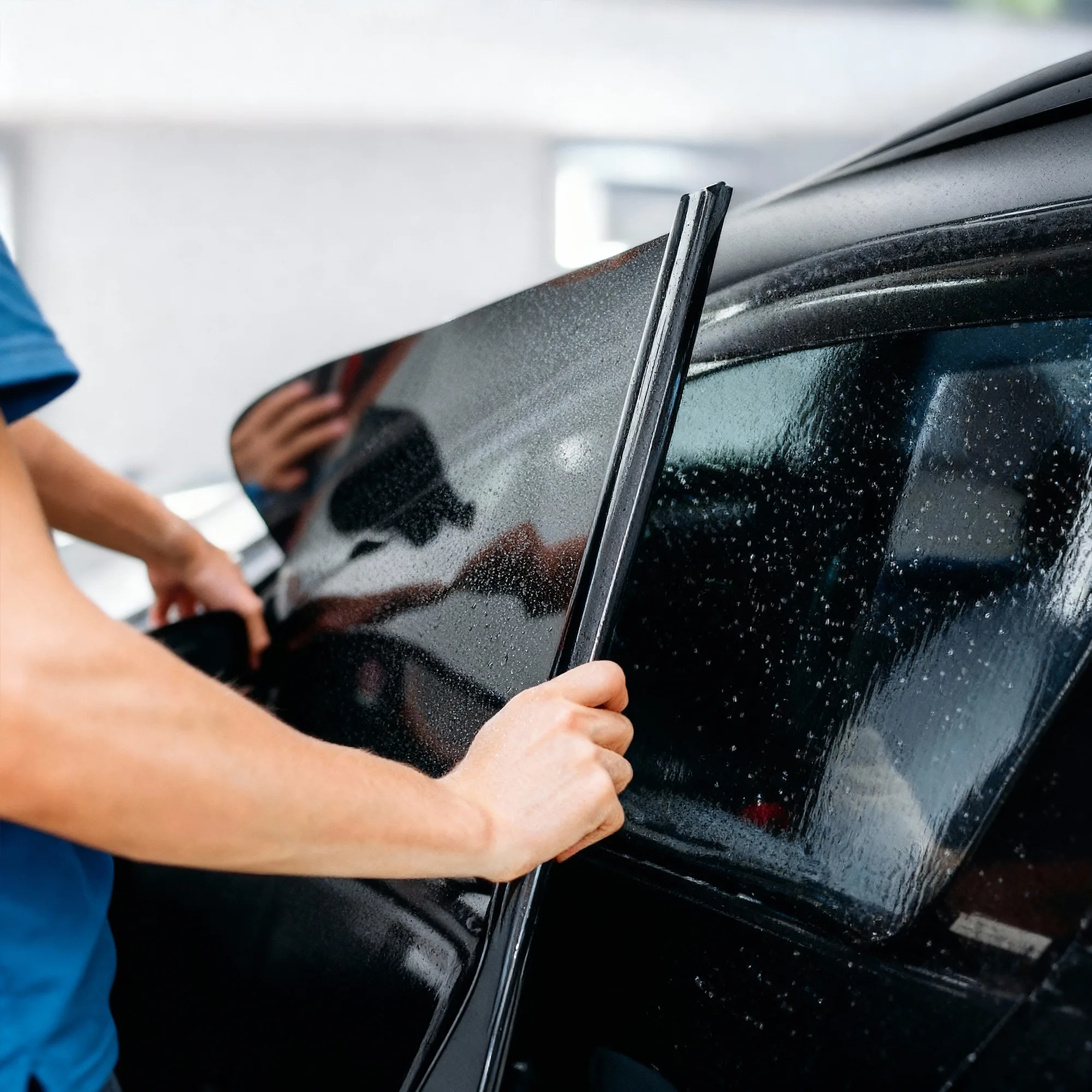
The first step involves cleaning the glass thoroughly. Any dust or oil left on the surface can cause bubbles beneath the window film.
After cleaning, technicians measure the glass and cut the auto window tint precisely to match the window shape. Many professional detailers use computer-controlled cutting systems to ensure accuracy.
Next, the installer sprays a mild solution on the glass and positions the automotive window film on the interior surface. This solution allows the technician to adjust the placement before final adhesion.
Using a specialised squeegee tool, the installer removes excess water and air pockets from the car window tint. Heat guns may then be used to shape the film for window glass so that it perfectly follows the contours of curved windows.
Finally, the technician inspects the entire surface to ensure that the car glass film is smooth and free of imperfections.
In our car detailing training studio, we measure that an installer usually spends 45 to 90 minutes per vehicle, depending on window complexity. Experienced technicians use heat guns to shrink the film and avoid creases on curved rear windshields.
Common Problems During Window Tint Installation
- Dust contamination – even small particles trapped under the film can create visible bubbles
- Shrinking difficulty – curved rear windshields require heat shrinking to prevent creases
- Curved rear windshield bubbles – improper squeegee technique can trap air pockets in curved glass
Maintenance Tips for Car Window Film
After installation, proper maintenance helps extend the life of the car window film.
Drivers should avoid lowering their windows for several days after installation to allow the adhesive to cure completely. When cleaning the glass, it is best to use a soft microfiber cloth and a gentle cleaner.
Harsh chemicals containing ammonia can damage glass films and reduce their effectiveness. Using the correct cleaning methods will help keep the car window glass film clear and durable for many years.
Conclusion
Car window film provides many benefits for vehicles, especially in India, where the weather stays hot and sunny for most of the year. It reduces heat inside the car, blocks harmful UV rays, reduces glare while driving, and improves privacy. It also protects the car’s interior from fading and makes the vehicle look more stylish.
Car detailers can choose from different types of window films, such as dyed, metalised, carbon, and ceramic. Each type offers different features and performance levels. By understanding these options, car detailers can recommend the best film based on the customer’s needs and budget.
Professional installers must follow the correct installation process to ensure smooth, bubble-free results. They should also guide customers on proper maintenance so the film lasts longer and performs well.
Car detailers must also follow Indian legal rules for window tinting to keep vehicles safe and avoid penalties. When detailers install window film properly and use legal tint levels, they improve driving comfort and protect the vehicle.
Overall, car window film installation helps car detailers deliver better service to customers while growing their business in the automotive detailing industry.
FAQs on Car Window Film
1. What is sun film for car?
Sun film for a car is a thin, specialised film that technicians apply to the inside of car windows. It helps reduce heat, block harmful UV rays, reduce glare, and improve privacy inside the vehicle.
2. Is sun film legal in India?
Yes, sun film is legal in India, but it must comply with the government’s light-transmission rules. Very dark films are not allowed on car windows.
3. What are the RTO rules for sun film in India?
According to Indian RTO rules, the front windshield must allow at least 70% visible light, and the side windows must allow at least 50% visible light. Car owners should use only films that follow these limits.
4. What are the benefits of sun control film for cars?
Sun control film offers many benefits. It reduces heat inside the car, blocks UV rays, reduces glare while driving, protects the car interior from fading, improves privacy, and makes the car look more stylish.
5. Does sun film reduce heat in a car?
Yes, sun film can reduce heat inside a car. High-quality films block infrared radiation from the sun, which helps keep the car cabin cooler and more comfortable.
6. What is UV protection film for car windows?
UV protection film is a type of car window film that blocks harmful ultraviolet rays from the sun. It protects passengers’ skin and prevents the car seats, dashboard, and interior materials from fading.
7. What is the difference between window tint and sun film?
Window tint and sun film are often used as the same term. Both refer to films applied to car windows. However, sun film mainly focuses on heat and UV protection, while tint sometimes refers to darker films used for privacy and appearance.
8. What is the best sun film for cars in India?
Ceramic sun film is often considered the best option for cars in India. It offers excellent heat rejection, strong UV protection, high clarity, and it does not interfere with GPS or mobile signals.
9. What are the types of car window films?
The main types of car window films are dyed film, metalised film, carbon film, and ceramic film. Each type offers different levels of heat rejection, durability, and price.
10. How much heat can car sun film block?
High-quality car sun films can block 40% to 80% of solar heat, depending on the film type and quality. Premium ceramic films usually provide the highest heat rejection.